
These graphs are updated through May, the latest month of Case-Shiller data:
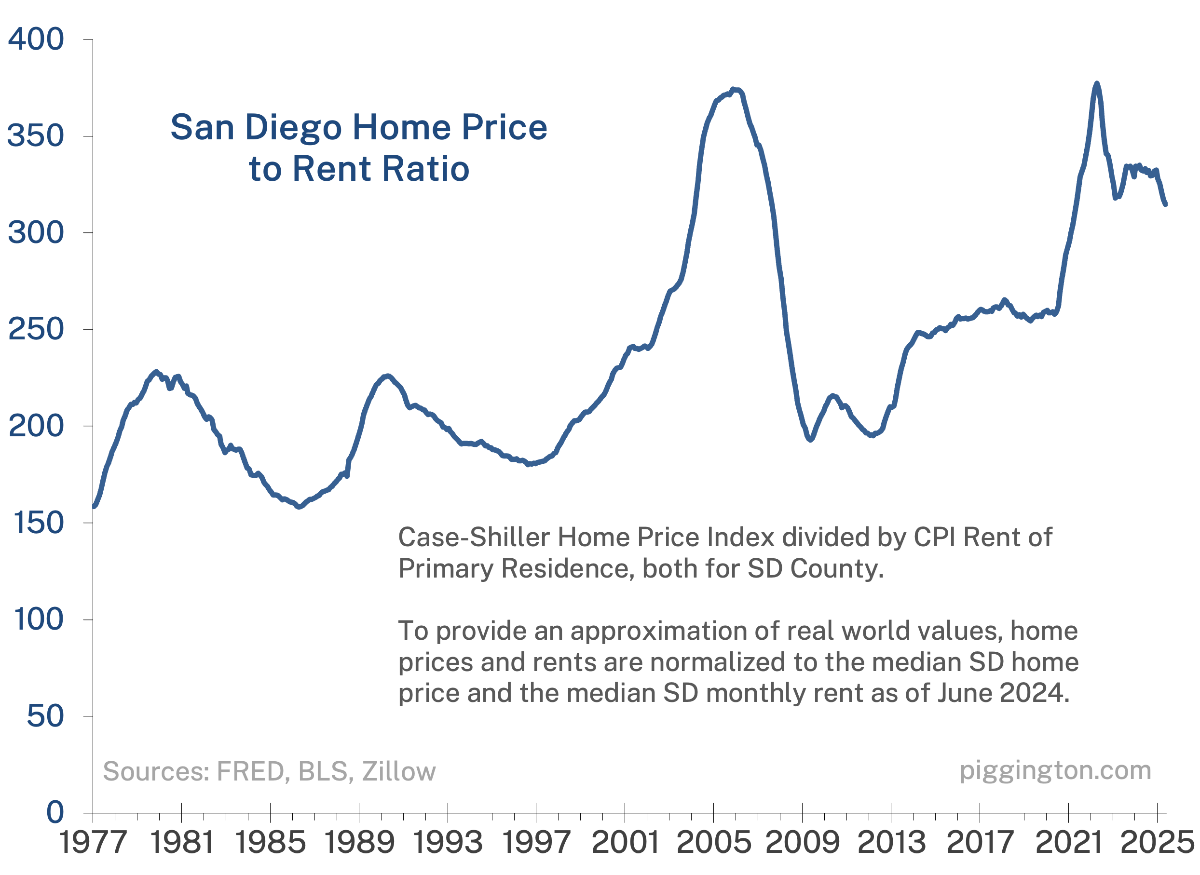
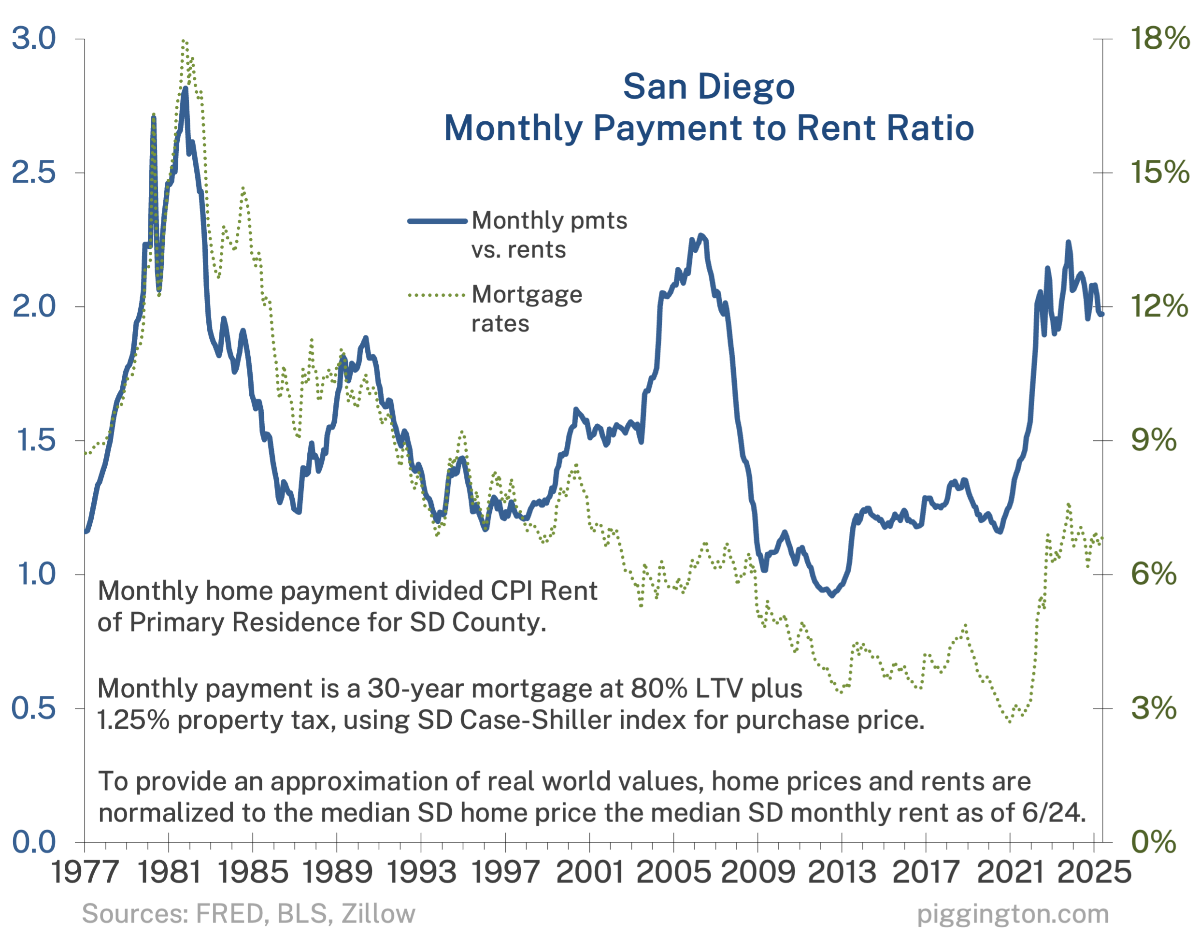
There’s been some progress towards affordability on both metrics — the price ratio is down 17%, and the payment ratio 12%, from their respective peaks. But both remain quite high compared to history.
The significance, in English, is that buying a home in San Diego is unusually expensive vs. renting one, and that is the case whether looking at purchase prices or monthly mortgage payments. Both measures have been this high in the past, but neither has been able to remain there.
My guess is that they won’t stay their this time either. I do think it’s likely that the pandemic gave a permanent boost to San Diego’s valuations. The remote-work revolution increased the premium on residential housing everywhere, and likey even more so in especially desirable/popular places like San Diego. It’s hard to know the size of this effect, though, and my suspicion is that it’s not big enough to justify the huge jump in valuation (decline in affordability) that we see in the charts above.
If affordability is to improve, it could happen by some combination of prices going down, rents going up, or — in the case of monthly payments — mortgage rates declining.
I don’t anticipate a ton of relief from rates. They may feel high compared to what we remember in the pre- and early-pandemic era, but that period was really an aberration. Current mortgage rates, and the spread between rates and inflation, are much closer to historical norms than the they were in the post-GFC era. So unless we’re going back to that interest rate regime, it doesn’t seem like rate have a long way to fall on a sustainable basis.
Also, if rates were to decline, that could bring a lot of locked-in inventory to market. (Meaning, owners with low-rate mortgages who were waiting for rates to decline before selling would finally have their chance). This increase in inventory would put downward pressure on home prices, in the opposite dynamic from when rate lock-in kept inventory low and helped prices remain stable even as rates shot upward. That said, this would be a temporary phenomenon, as any inventory surge would eventually be absorbed by the market.
That leaves much of the work to be done by rising rents, falling prices, or some combination. My feeling is that this depends a lot on the economic climate, and on how long the adjustment takes. In a strong economy, prices might largely hang in there for several years as rents eventually catch up. In a recession, the adjustment could be quicker, and be driven more by prices falling to meet rents.
For now, it seems like the long standoff between buyers and sellers is resolving in favor of the buyers. This raises the chances of further price declines being a part of the adjustment in the near term, but it doesn’t tell us much about how any return to affordability will play out over the long run. For that, we just have to watch and wait, and update our views as new information comes in. I’ll try my best to do that here!
rents already back on the upswing?
“Rents increase across San Diego County by 4.1%; city sees 9.3% spike: Survey | NBC 7
San Diego”
https://youtu.be/6ZGlW9ljw0A?si=IzB6IMh79kWhj1-U
According to Redfin, rents in San Diego have actually declined by 5.2% year-over-year. The video appears to reference data from a survey, so it’s unclear which source is more accurate. That said, just based on the number of available rental listings, there seems to be quite a bit of inventory.
https://www.redfin.com/news/rental-tracker-april-2025/
yea based on all the data I can find, it seems like rents are either the same or slightly lower than last year. Definitely not 10% spike.
Also want to note that if theres any time for rents to rise, its right now, as school is starting very soon
I think this current listing in redfin epitomizes the current market
Is there any chance of like “panic-induced” selling. People that are currently debating moving but havent cause of whatever reason (think value will keep going up, interest rates, etc…) but once they see prices starting to drop, they sell cause they’re scared they’re gonna miss out on their chance to cash in on the current super high valuations
As far as I can tell, everyone still thinks housing is a can’t-lose investment. (My impression is typically they aren’t really consideration valuations, but rather looking at the price gains that led to those valuations, and assuming that’s just how things work). It would take a lot to get all the way to panic, in general. That said I suspect there are people on the margin who see it the way you described, but they are in the minority in my view.